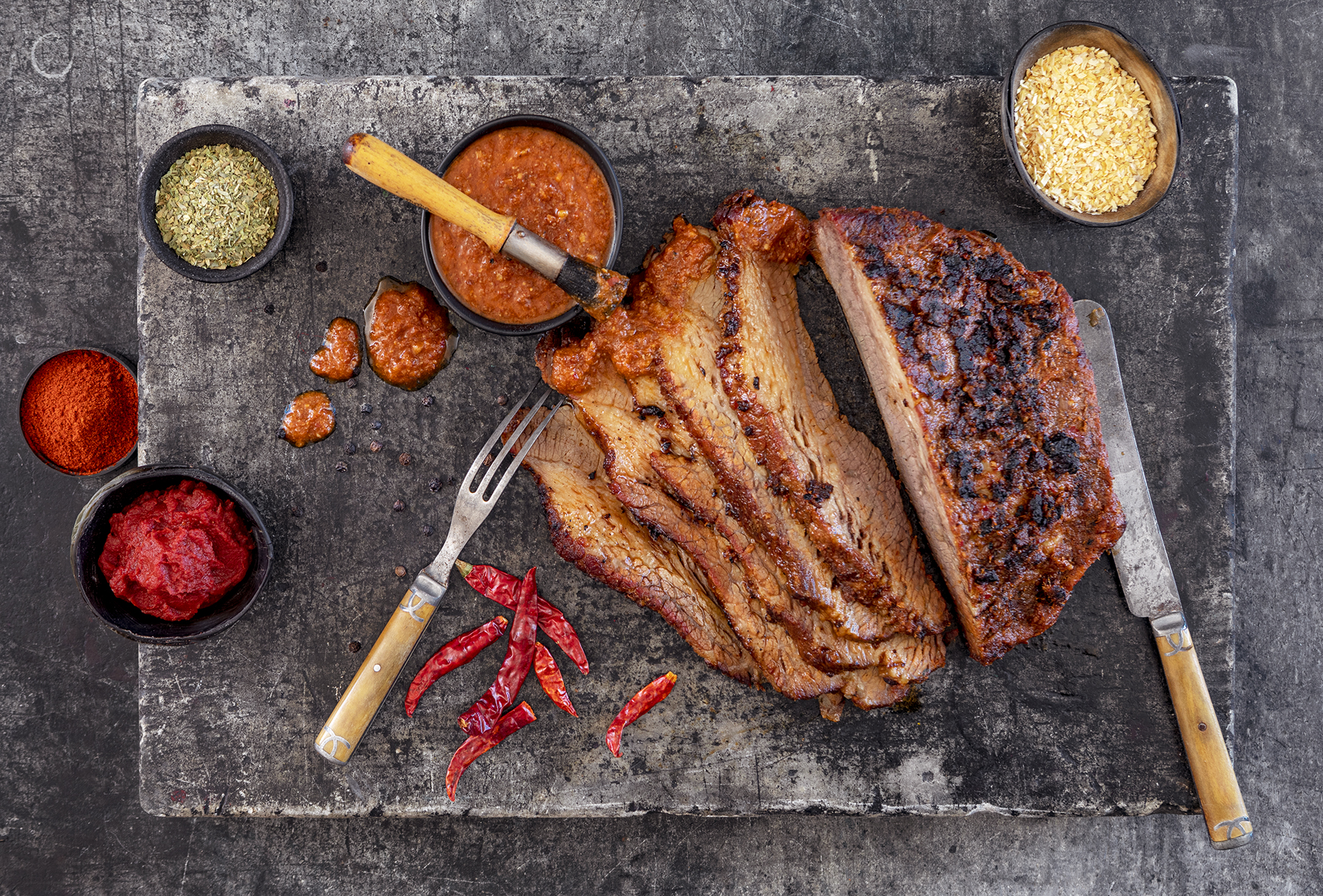
Yes, you can use the oven to make a good Texas Slow-Roast BBQ brisket! It’s not quite the same as the melt-in-your mouth meats that came out of my Aunt Barbara’s backyard smoker in Jacinto City, Texas. But slow roast anything for a good long while and add a sauce with soaked and pureed ancho and chipotle peppers and you get delicious eats. To make this brisket, you’ll wrap the meat in bacon, which then becomes part of the thick and zesty sauce. If you have brisket left over, chopped fine and served with the extra sauce it makes great BBQ sandwiches. Continue Reading…
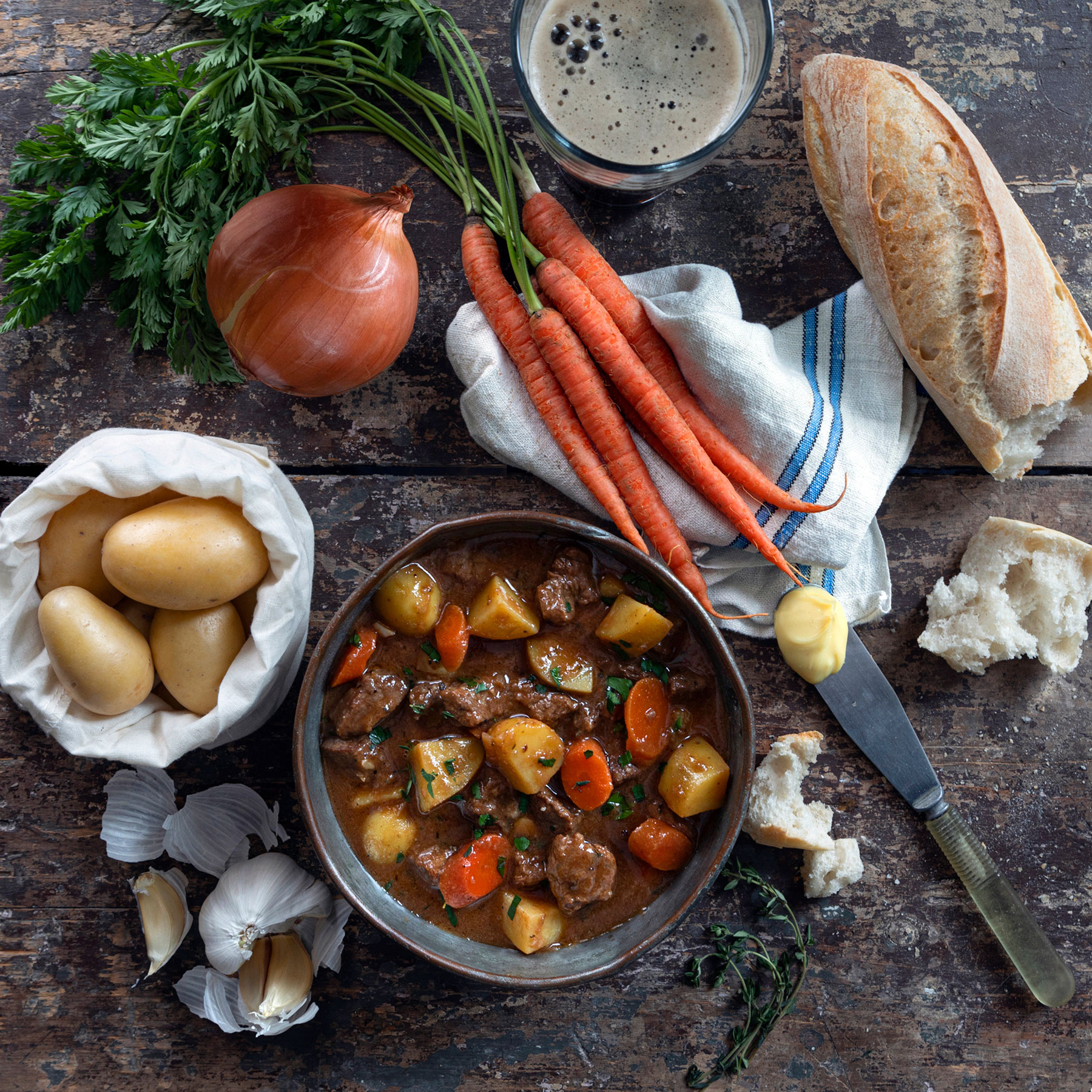
One of my boys loves deep dark flavors. If you want that in a good stew, steak and stout are the perfect ingredients. And when using a good grade of meat, you don’t really need the super long slow roast that you need with lesser cuts, so you can make this on the stove-top in a Dutch oven. With the pandemic still lingering, we may not be able to gather in crowded pubs right now, but this hearty stew is a pub-worthy comfort that will bring cheer to your home crew. Made with Guinness, sirloin steak, and carrot and onion to mellow the stout, it’s full of deep rich flavors. Continue Reading…
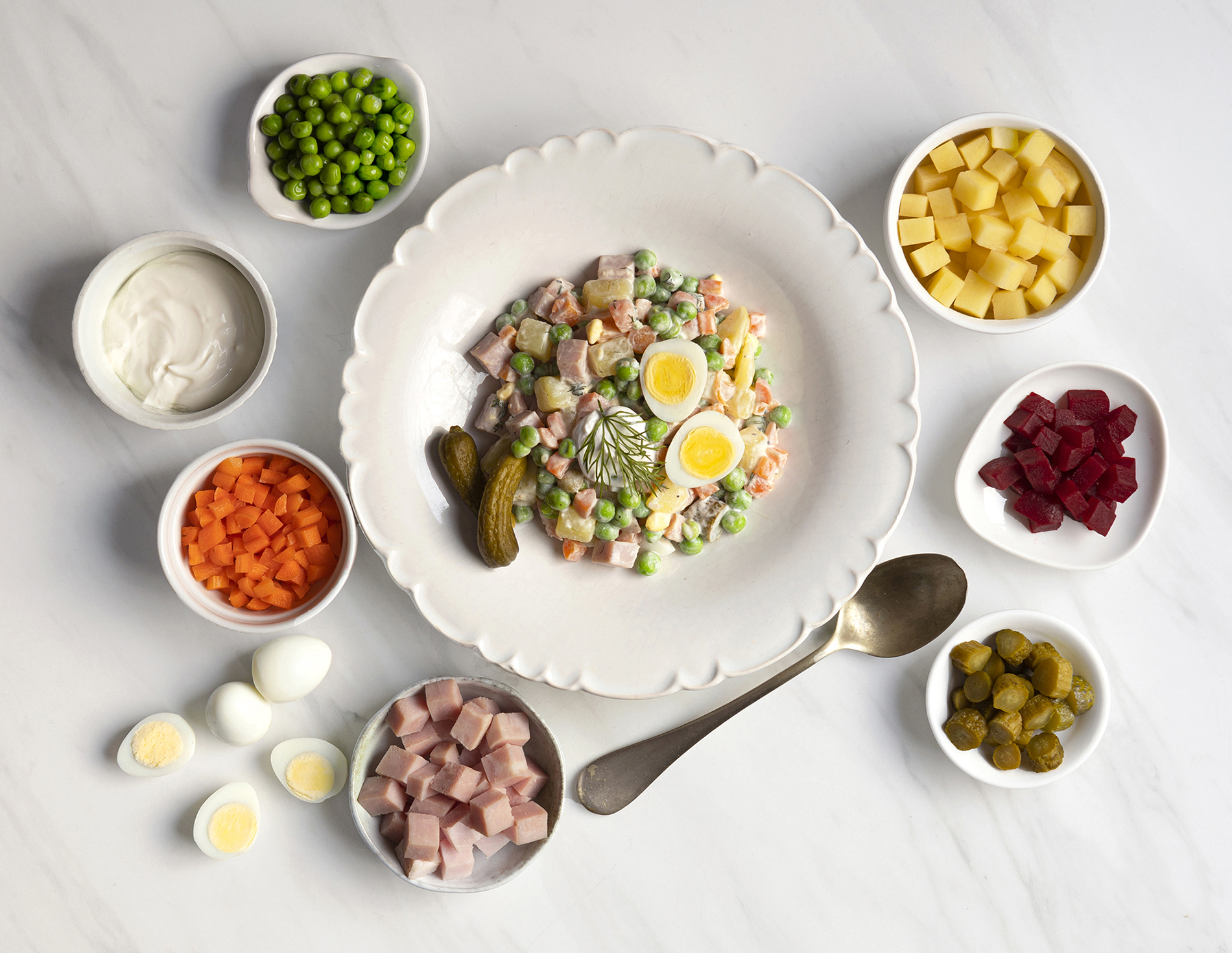
I laughed when I saw it. Delightedly chortled, more like, to see that the New York Times was running a recipe story featuring that thousands-of-renditions Slavic home food: Russian Salad. I’d just confessed my love for the stuff the day before to a friend, as if whispering a guilty pleasure. And now the Times had legitimized it. Classically a mosaic of colorful and carefully diced carrot and potato, plus peas and ham, bathed in mayo, I’d long ago found making variations on the Russian Salad theme to be a “treaty” way to eat veg. I make it using everything from trimmed stalks of broccoli (steamed the tiniest bit to tender them) or with celery root, jicama, radish, kohlrabi, and maybe a little cheese, skipping any meat inclusions entirely. But the classic version is good, too.
Near my house, Russian Salad is everywhere. Just travel up the road in Skokie-Evanston to the various mom-and-pop grocers and you’ll find it ready made both plain and fancy. Layered in clear bowls with piped swirls of cream on top, the fancy versions look like frilly parfaits.
As it turns out, fancy is actually a throw-back: The salad’s genesis was quite gourmet. Food historians place its origins in Moscow where a French chef named Lucien Olivier served it starting in the 1860s at the Hermitage restaurant, mixing in everything from caviar and crawfish tails, to capers and veal tongue. Oh, and Lucien slathered his in Provencal dressing. Post Russian Revolution, the salad took on the proletariat stylings that survive today.
With a nod to Olivier, my version of the current classic dolls things up a bit with home-made mayo, sour cream, dill, and quail eggs. Plus, pickled beets that you mix in at the very end.
My recipe also relies—as the NYTimes version does—on careful, even dicing. Trimming and cutting the ingredients to uniform size makes for good balance, mouth feel and presentation. P.S.—Don’t hold back on your own variations! Let me know what you come up with—I’d love to see. Continue Reading…

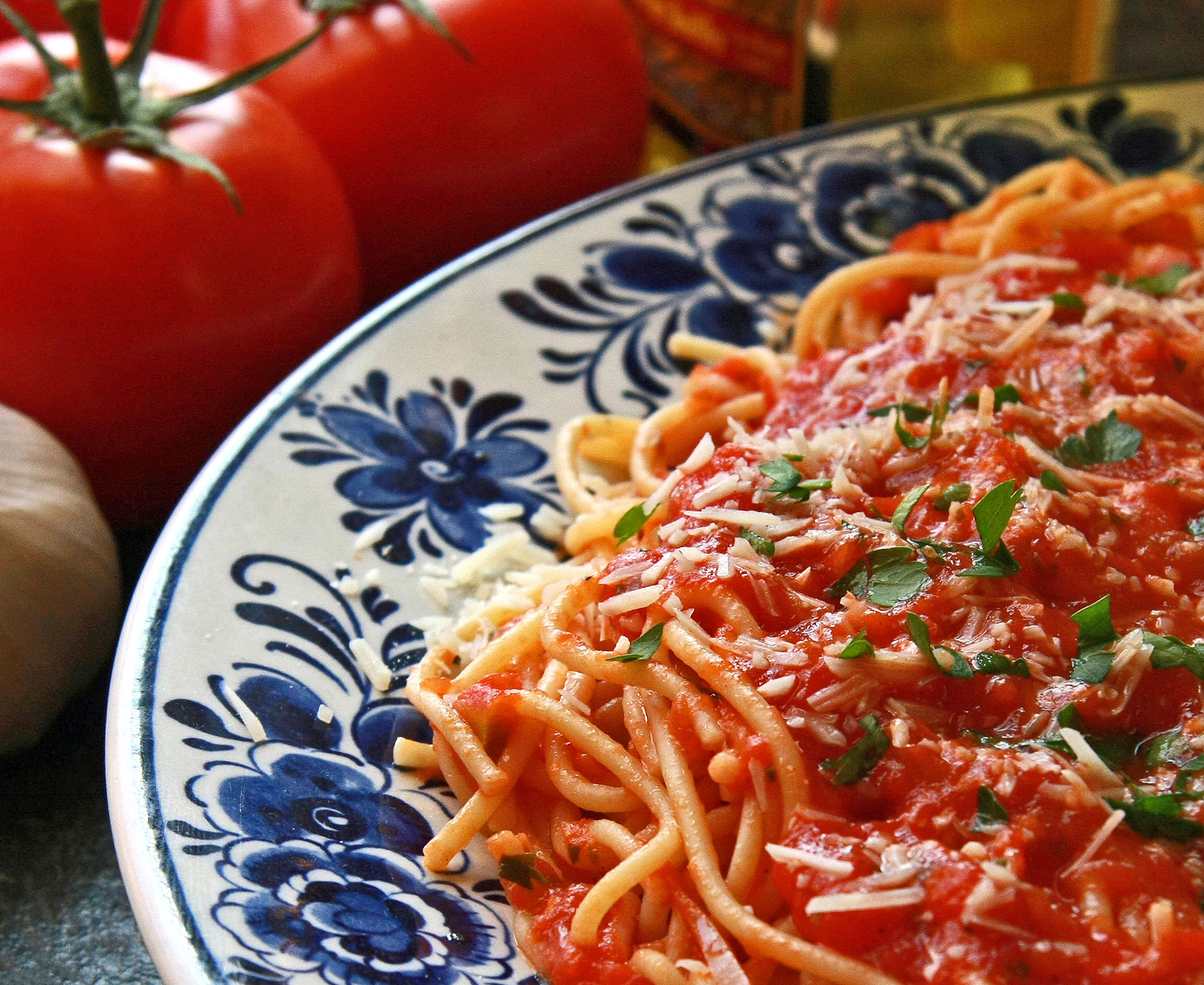
In a 1973 interview with long-defunct Mainliner magazine, Frank Sinatra said, “Everything I know about cooking, I learned from my mother.” Mrs. “Dolly” Martin Anthony Sinatra lived in a home Frank built for her on the grounds of his Palm Springs estate. Her simple tomato, garlic and herb spaghetti sauce recipe was Frank’s favorite. We’ve tested it and see why he loved it—meatless, but full of flavor, it’s become our family favorite, too. Continue Reading…
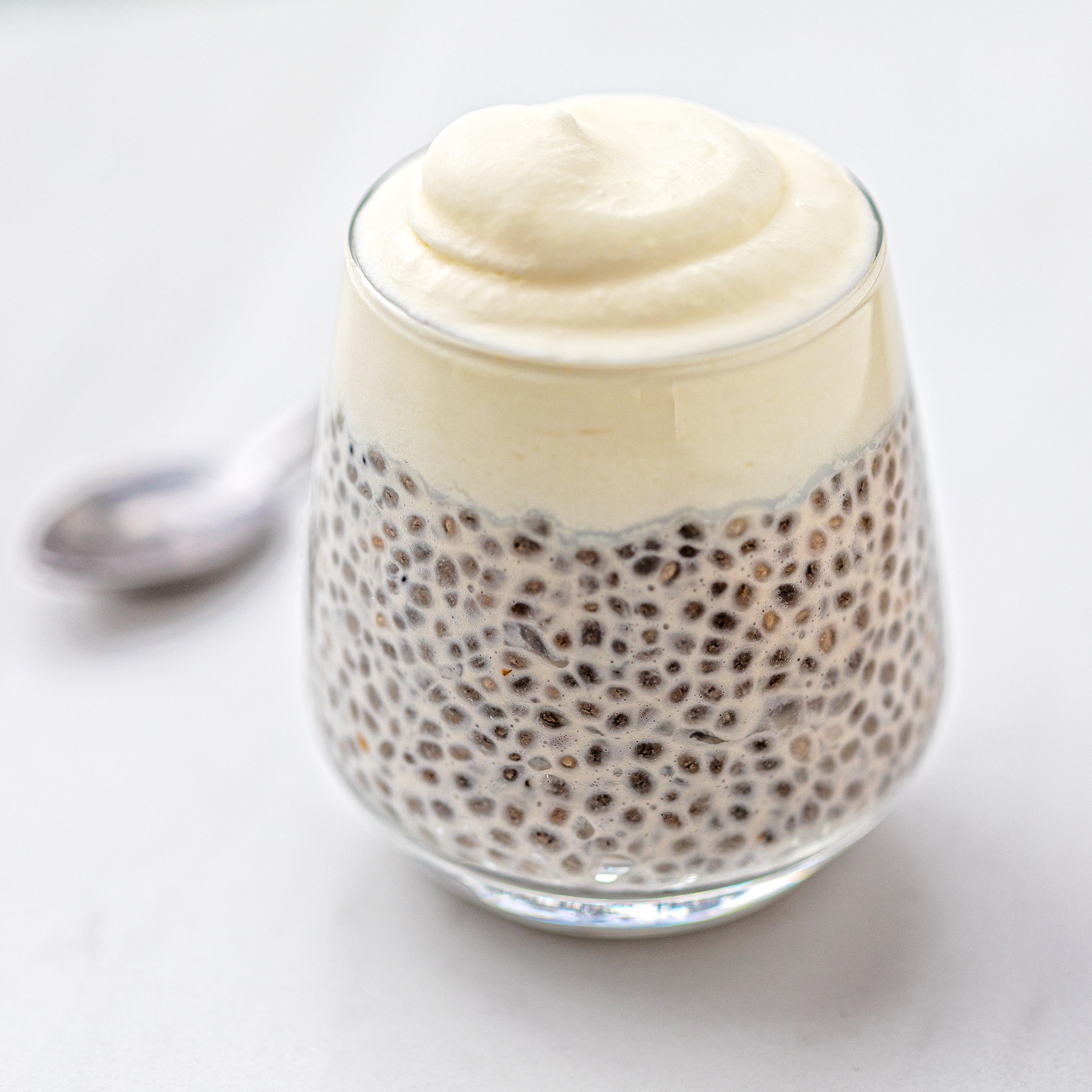
I’m so late to the charms of chia! And not for lack of my daughter Em’s trying–she’s been raving about the nutrition-packed little seeds forever: 1 Tbsp has 6 grams of fiber + 3 grams each of protein and Omega-3s. With all of that packed into the teeny seeds, it’s no wonder the word “chia” came from the Aztec word for “strength.” Aztecs are credited with usage of the ancient grain all the way back to 3500B.C. It was actually one of the main foods in their diet. Honestly? I waited to try chia because I was squeamish, thinking the seeds looked so alien. But avoiding carbs and sugar, and constantly on deadline (which makes quick food prep helpful) I decided to try making this super easy chia pudding. Put it in a jar, shake it up, stick it in the fridge and in two hours, the seeds plump up into a creamy pudding. No cooking needed. Lots of comfort and nutrition provided. I should have listened to Em sooner. Note: This recipe has no sugar added. You can choose to top with fruit or, use a different healthy sweetener instead of the monkfruit sweetener, if you like.
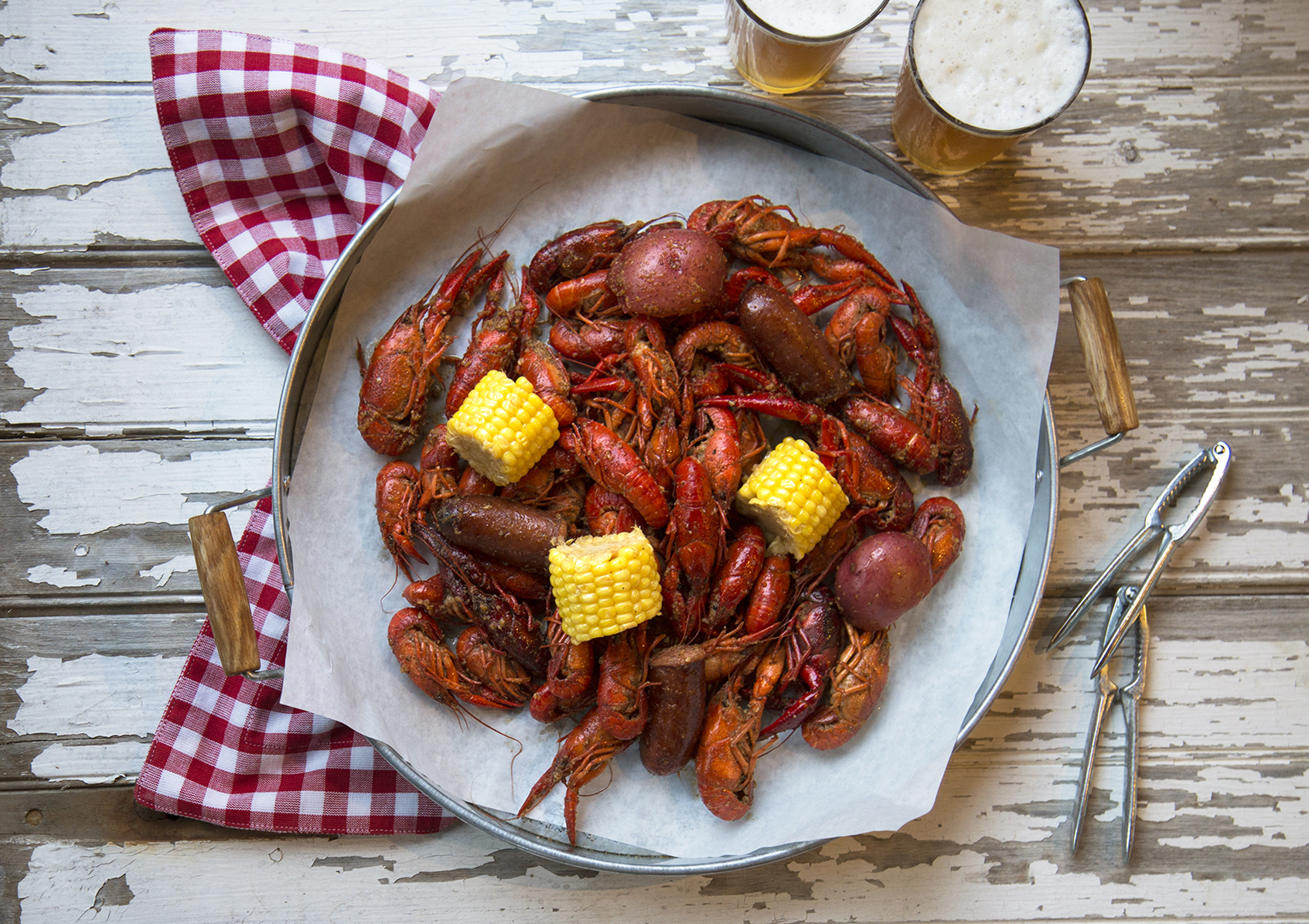
Mardi Gras parades for 2021 may have been canceled, but the feasting goes on. With crawfish season on, fill a pot with bright red “mudbugs” and do this spicy boil! With plenty of andouille sausage, corn cobettes, and red potatoes, it’s a joyful mess to eat. For a more elegant preparation? Try our Crawfish Monica, featuring the crawfish tail meat in a creamy linguini preparation. Note: Save all of the shells (heads, claws & all) and when you have time, simmer them in a pot to make a nice stock you can use for a crawfish bisque or seafood stew. Continue Reading…
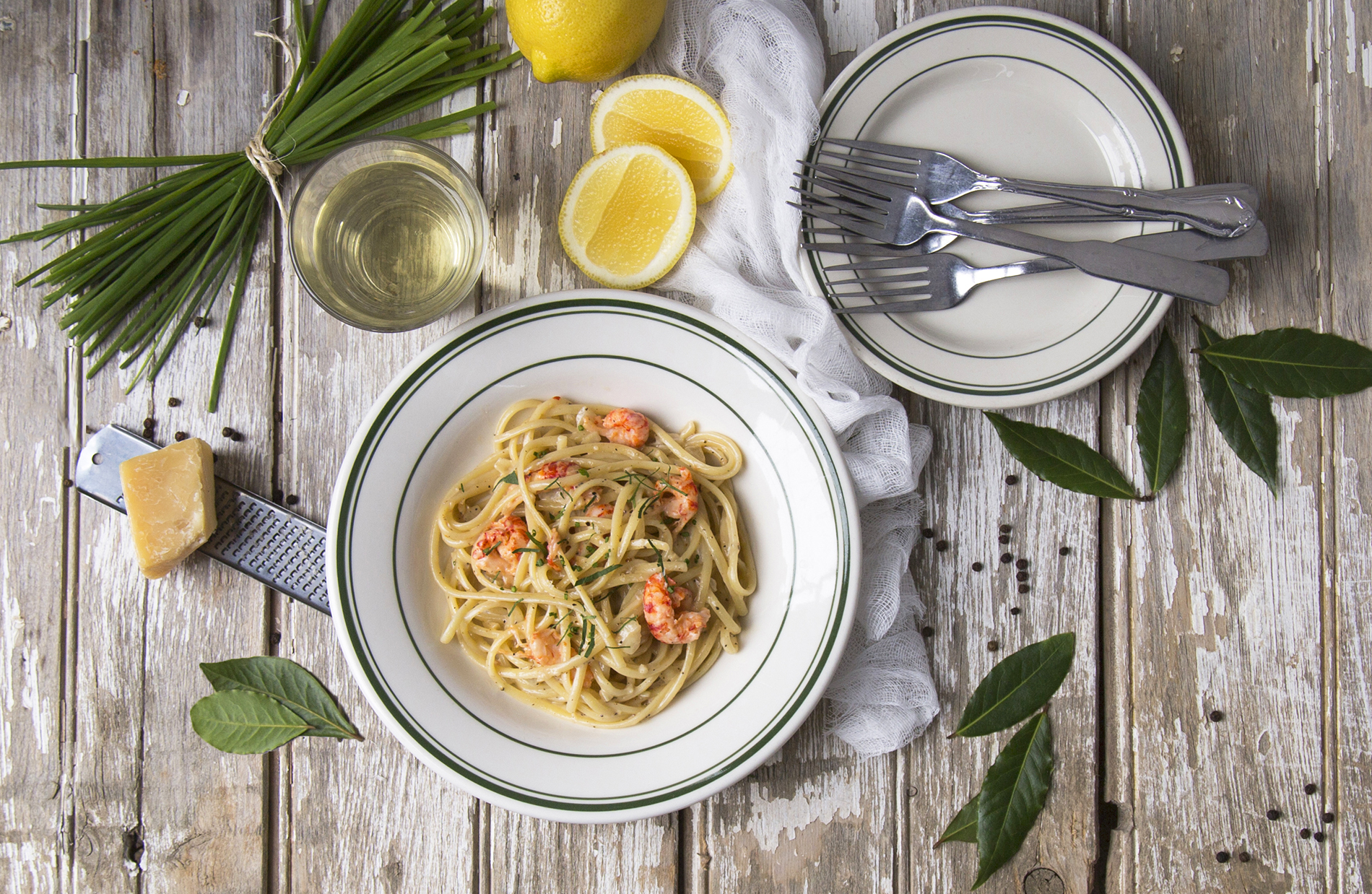
Crawfish season is in full-swing, and there’s no better way to prepare those bright red “mudbugs” than in a hot boil of spices. Our recipe for the traditional crawfish boil including sausage, potatoes and corn in the mix is a joyful mess to eat. But for a more elegant preparation, you can also boil the crawfish without the corn/potatoes/sausage add-ins, picking the tail meat to make this creamy linguini dish that shares part of my name: Crawfish Monica. Because crawfish are little (only 2 ½ to 4-inches long) it takes between six and seven pounds of whole crawfish to yield one pound of crawfish tail meat. Note: Save all of the shells (heads, claws & all) and simmer them in a pot to make a nice stock you can use for a crawfish bisque or seafood stew. Continue Reading…
Chocolate and Valentine’s Day are a forever pairing. For me, the choco-heart tradition is dipped in memories of my Aunt Ruth. She had the loudest laugh, the thickest auburn hair, and the worst record of timeliness. But when she got to the party, her laugh came too, along with jokes she’d tell (forgetting the punchline,) and armloads of gifts. On Valentine’s Day, that would mean heart-shaped paper boxes stamped in gold, with satin bows, lace trim and little frilled paper cups full of chocolate-covered cherries. If Ruth were still around, I think she’d like these very-cherry home-made chocolates as much as I loved those frilly boxes. I’m sure you’ll like them too! Continue Reading…
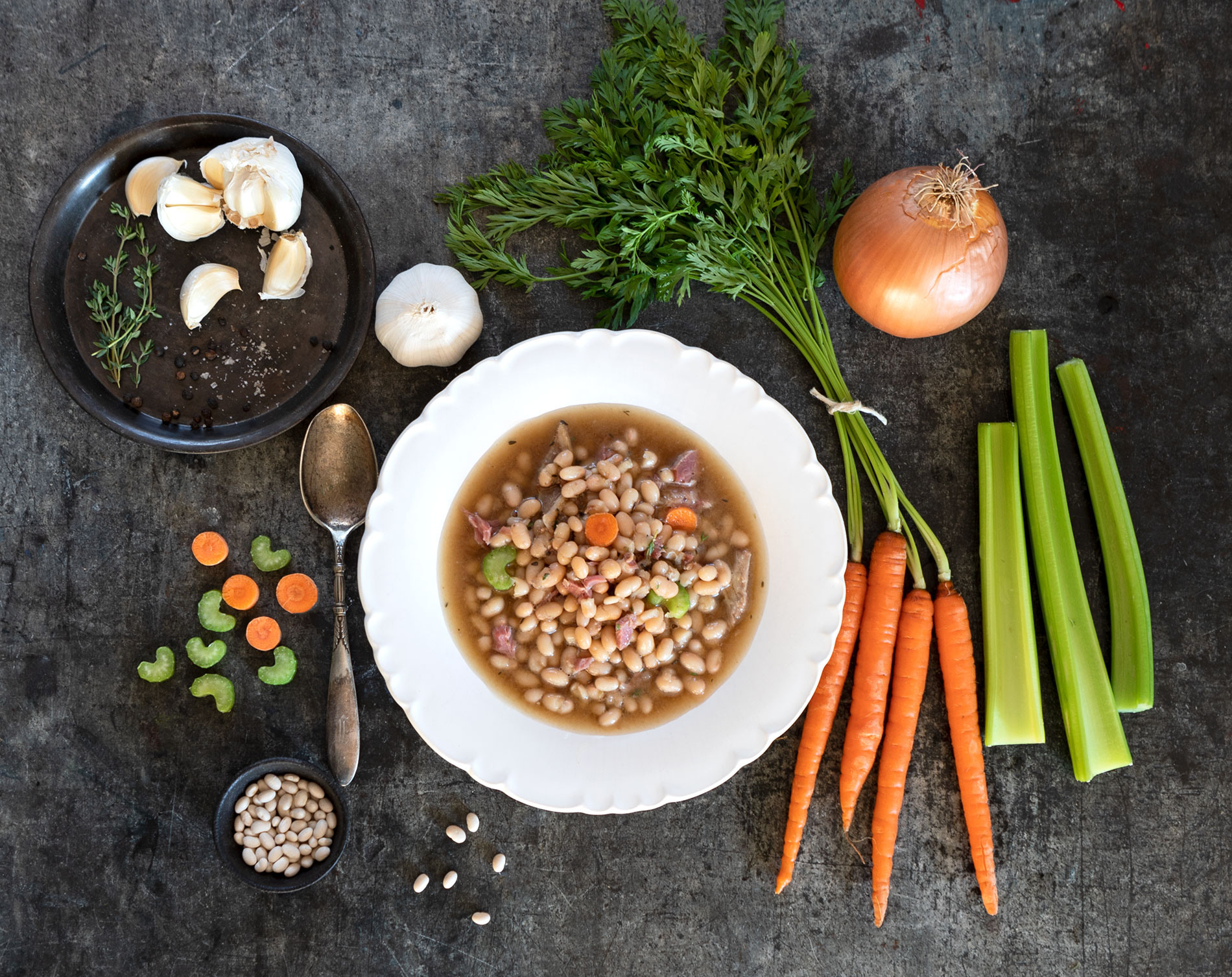
This satisfying Southern dish full of richly flavored stock, smoky pork, vegetables, and creamy white navy beans, came to me by way of a North Carolina chef who had ready access to both locally grown-vegetables and humanely-raised meats. My home-cook version is a warming supper for chilly, stay-at-home days. I start the stock first thing in the morning in order to have the navy beans in the oven for their bake by midday, filling the house with rich, smoky, mouth-watering aromas. By suppertime, no one needs to be called to the table—they’re all ready and waiting. Add a nice side dish of cooked greens to go along with if you like, and some crusty fresh bread for dunking. Continue Reading…
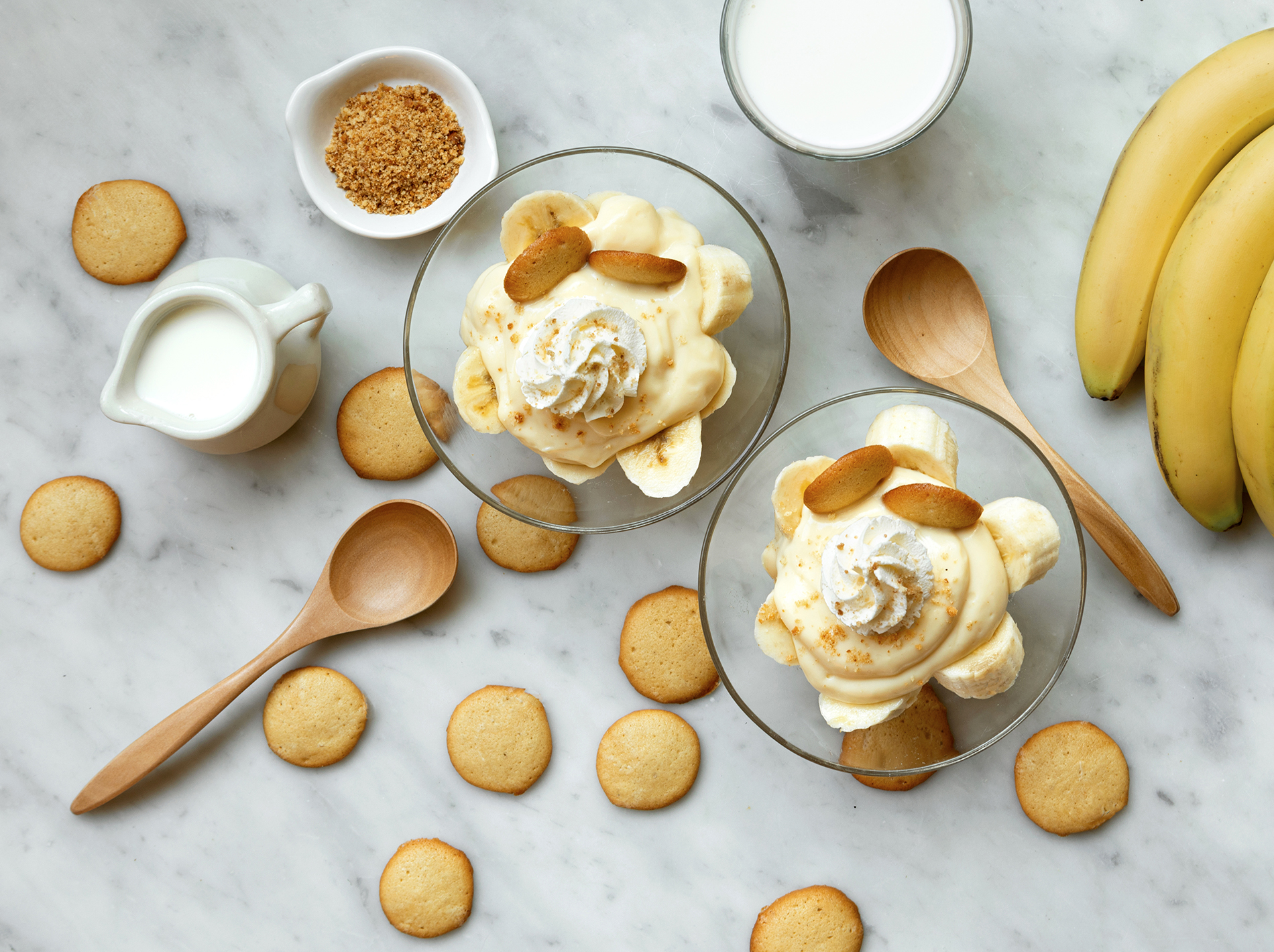
This is comfort, pure and simple. Smooth and creamy vanilla pudding, fresh sliced bananas, crisp little vanilla wafers, and a dollop of whipped cream. Perfection. When I was little, we used to put store-bought vanilla wafers into the warm pudding, letting them soften as the pudding chilled. But making the cute little cookies from scratch is easy, and I like the crunch they add served whole as a garnish, or, crushed into crumbs to sprinkle on top. This recipe makes four individual servings of the banana pudding–but 80 or more of the quarter-sized vanilla wafers. Note: The wafers bake up quite hard, which helps them hold up well in the pudding, but they are much harder than the boxed ‘nilla wafers. They do work well crushed as a crust for a cheesecake, or, for dunking in coffee or tea. Continue Reading…